Sober Friends
The Sober Friends Podcast: Two Guys Talking Recovery
Matt and Steve have been sober for over a decade each. They still don't have it all figured out.
This is a podcast about recovery - AA recovery specifically - but it's not your sponsor's recovery podcast. It's two friends talking through the stuff that actually matters:
What do you DO when you're not drinking? How do you handle control issues 15 years in? Why does calling someone in recovery feel so goddamn hard? What happens when you remove alcohol but don't replace it with anything? And seriously, do you miss drinking or do you just miss the relief?
Every week Matt and Steve work through these questions together - sometimes they have answers, sometimes they're figuring it out in real time, and sometimes they just need to talk it out like you do with a friend who gets it.
If you're in recovery, thinking about recovery, or just trying to figure out how to live without alcohol as your coping mechanism - welcome. Grab some coffee. Let's talk.
Topics: Alcoholics Anonymous, 12-step recovery, sobriety, addiction, relapse, service work, early recovery, staying sober, and everything in between.
Matt and Steve work AA programs but speak only for themselves. This show isn't affiliated with Alcoholics Anonymous.
New episodes weekly at soberfriendspod.com
Sober Friends
E268: Dr. Adi Jaffe: Getting Better Is the Goal
Use Left/Right to seek, Home/End to jump to start or end. Hold shift to jump forward or backward.
What does recovery actually mean? If you've ever measured your sobriety by days and wondered if there was more to it than that, this episode is for you.
Matt sits down with Dr. Adi Jaffe — psychologist, neuroscientist, UCLA researcher, and author of The Abstinence Myth and Unhooked — for one of the most honest and wide-ranging conversations Sober Friends has ever had. Dr. Jaffe went from meth-addicted drug dealer with nine felonies to earning his PhD and building one of the most forward-thinking recovery programs available today. He knows what it feels like to be on both sides of this.
This episode challenges some assumptions — including a few of Matt's own. They dig into why black-and-white thinking keeps people stuck, why shame is more dangerous than the substance itself, why the label "alcoholic" helps some people and hurts others, and why stopping drinking is not the same thing as getting better. They also find more common ground between Dr. Jaffe's approach and AA than you might expect.
Whether you're in AA, tried AA and it didn't stick, or are just trying to figure out what recovery looks like for you — this one is worth your time.
Find Dr. Adi Jaffe: Website: https://www.adijaffe.com The Abstinence Myth: http://www.theabstinencemyth.com Unhooked: https://www.readunhooked.com IGNTD Recovery Program: https://www.igntd.com Instagram: https://www.instagram.com/dradijaffe Facebook: https://www.facebook.com/dradijaffe LinkedIn: https://www.linkedin.com/in/dradijaffe
Find Sober Friends: Website: https://www.soberfriendspod.com Email: matt@soberfriendspod.com
📫 Get more honest conversations about sobriety delivered to your inbox! Subscribe to The Sober Friends Dispatch, our weekly newsletter where we go beyond the podcast to share real strategies for alcohol-free living. Join our community by clicking here.
And the point of growth mindset is you're good at the things you're good at and most of us lean towards practicing only the things we're good at most of the time because it feels good to be good at something. So if you use a tennis example a lot of times when I talk about this I'll just use it here. If your forehand is really good at tennis and your backhand is really bad, what a lot of people do is they'll run around their backhand. When somebody hits them a backhand they'll run around so they can hit it as a forehand. Well sure forehand is your better stroke, but that also means you're never going to practice your backhand, which means your backhand is always going to be bad. Delibor practice is setting aside some time and forget tennis for a second any other area in your life. To practice the things you're not good at people don't like doing it because it feels uncomfortable, but if you set aside time to practice the things you're not good at over time you will get better at them.
Matt:Welcome to the Sober Friends Podcast. Hey, if you are looking to get on the sober journey, you're in the right place, brother. You're brand new to Friday. You're an old time, or somewhere in between. My name is Matt J, a I'll be taking you through the show, and we're going to go today, Doctor Adi Jaffe. He is the author of the Abstinence Myth. We're going to be challenging some of your priors today, maybe even some of my own. Uh, Dr. Jaffe, welcome to the show.
Dr. Adi Jaffe:Thank you so much for having me, Matt.
Matt:Yeah, I'm glad that it's great to meet you too. So looking through all your materials here, one of the things that I saw recurring is a growth mindset. And I am, I'm a big fan of the growth mindset. I utilize it at work. And the frame for everybody today is there's a principle, which is a bar against all information, which is proof against all arguments, which cannot fail to keep a man in everlasting ignorance, and that principle is contempt prior to investigation. And you find that one in the big book. So as a framing here are the Steve, my co-host, who is often here and I, we grew up in AA. But I don't consider this to be a podcast. And we're open to different ways of getting sober. To me, I just want people to get sober.
Dr. Adi Jaffe:I just want people to get better, you know.
Matt:Me too.
Dr. Adi Jaffe:Sometimes, sometimes it goes all the way to sober, sometimes it doesn't. But if you're really compromised right now, and with some work, whether it's my work or somebody else, you can get only slightly compromised. I'll still take that 99 times out of 100.
Matt:I really think all or nothing can't, I know it is for We talked a little bit beforehand about our own like mental struggles. I have ADHD. So therefore all or nothing is like the worst thing for me. Like if I can't, if I'm not going to get 100% of the way there, why try it all. So if I'm struggling with sobriety, and I'm not 100% of the way there, why gets sober? So awful mindset.
Dr. Adi Jaffe:You know, I'm sure we'll get into this in some point, but I'll just plan to see. I'm a firm believer nowadays that it's that way of thinking that even got me in trouble in the first place. life. Like I think the reason I sought out drugs and alcohol when I was in my teens was because in my head, I was either good or bad, I either fit in or I didn't. People either liked me or they hated me. It was so black or white. And unfortunately most of the time I landed on the black, most of the time it
Matt:In
Dr. Adi Jaffe:wasn't good, right? I was nowhere near perfect, so I might as well throw it all out. People didn't always like me. So I might as well not even work towards having people like me at all, just be
Matt:Yeah.
Dr. Adi Jaffe:really. Senator and so focus because what does it matter. And then I didn't feel great in my body all the time. So screw it. Let's take whatever we can in order to change the way I feel. That was that black or white thing that was there for me.
Matt:I can so relate. I was on the recovered podcast this past week. And our topic was guilt versus shame. And I think you're saying what you said before is another way of shame. Shame is how I feel guilt is what I did. And to me it's like the people who don't like me, well, they don't like me because I'm bad. That's shame. And frankly, the people who do like me, if they really knew me, they wouldn't like me either.
Dr. Adi Jaffe:I'm not sure, yeah. Yeah, I say it as shame as who you are. Guilt is what you do, but same, same.
Matt:Yeah,
Dr. Adi Jaffe:right. It's a by the way, and you'll hate this with I'll put all the things that we're going to not just agree about but debate and discuss in more depth here, right at the front end. It's one of the reason why I hate the term alcoholic and addict is because. If I am an alcoholic and I'm not somebody who struggles with alcohol, there's a thing about me that is different. Now you and I we did talk beforehand. There are a lot of things about me that are different, right? I have ADHD. Some people would certainly play with me somewhere on the spectrum. I have a voice attachment style, right? I lean towards depression. I mean, I can I can name a whole things instead of it's about me, but. I'm also pretty smart. And I work really, really hard. I have a lot of great adaptability There it's hard to find a label that would encompass all those things and so any label that I pick for myself. Just doesn't do the Back in that black and white thinking piece. I just want people to put a little, not even a little bit, I want people to put a lot more gray and nuance into the way they see the world black and white thinking in general in my opinion is pretty dangerous.
Matt:Yeah, I don't know if we're going to necessarily disagree or debate. My whole style is I like to understand somebody else's point of view and it may not agree with that. I'm not going to really. I'm not going to debate people. This is to me, it's not right or wrong. I have all I have viewed alcoholism and drug addiction as a spectrum. Regardless of whether you're on the spectrum or not and you have a problem, it's a problem. And it doesn't mean you're any less sick than somebody who is a gutter drunk, but there is a spectrum of where land and just because you're not a gutter drunk doesn't mean you have to wait into that point to address it.
Dr. Adi Jaffe:Yeah, look, I mean, look at the world we're living right now, right. I think when people think of addiction and that's why my book on the hook they talk about my most recent book. Compulsive habits because we haven't quite gone to the place where we call technology addiction and addiction as a as a clinical diagnosis. But it would be hard to say that people are not getting addicted to their devices or their,
Matt:I am
Dr. Adi Jaffe:an absolute specific, you know, tools porn gambling right gambling is a recognized clinical disorder, but people think of bad habits. And they think that's very different than addiction. I go, no, addicted to just a very specific subset of bad habits.We've given a name to. But, you know, I work just as an example out of all the things that I just mentioned, I've worked with men who've been using porn every day, oftentimes multiple times a day for their entire life. And they don't even think it's an issue until they have a partner and all the sudden it starts creating issues in the relationship and struggles there. So I just, I want us to broaden the conversation a little bit when we have this conversation
Matt:discussion.
Dr. Adi Jaffe:in This addiction is, you know, you probably, you probably dealt with this, you say addict, you say addiction and a good 75% of the people you're talking to say, oh, they're not talking about me. You start talking about really bad habits that are hurting you at work in your relationship with your health. People become a little bit more open. They say, well, which kind of habits are you talking about? And I don't know that everybody has that that's probably too broad of a generalization. But the vast majority of people struggle with some unhealthy, compulsive habits.
Matt:I didn't think of it that way, but this is, this is so spot on that if we change the language, we can make more people inclusive, even if it's sort of a, I almost look at that. That's a Jedi mind trick. We are kind of saying the same thing, which we're changing the language to get people to buy in. And that's what communications people do at work. We're communicating. We're going to change the language to bring more people in so that it's more absorbable. I do get a lot out of calling myself an alcoholic. It's a helpful reminder to me. It keeps me humble. Having said that, I know a lot of people nowadays who are like alcohol use disorder, or however they want to say, however they want to refer to themselves, I'm okay with that. Call myself an alcoholic. It works for me. The bite in that is the thing that keeps me sane and humble. But if that's something that is not going to work for you, that's fine. And it's also okay if you want to change that Sunday.
Dr. Adi Jaffe:yeah, can I ask you a question? Cause I
Matt:yeah,
Dr. Adi Jaffe:always, I wonder about this. Well, I've asked this question. I have a lot of friends who are long term sober and other 12 stuff groups. I had three years in the program. How, what was your response like to the term alcoholic when you started?
Matt:When I started, it was like, I could barely get that out of my mouth. My dad was an alcoholic. I was not going to be an alcoholic. Cause it's going to make me physically abusive to women and a bad person. Cause he was an alcoholic. it was a barrier to
Dr. Adi Jaffe:And me, so a few really cool things about that. Number one, the label means different things for different people. Like I had no experience with alcoholics before somebody told me I was one. And in my perception and the distortion that happened in my head is by the time somebody called me an alcoholic, I had a drinking problem when I was in high school of college. Cause I drank whenever I could because I felt like crap about myself and when I drank, I didn't. But by the time I went to rehab and jail and all the other wonderful things that this condition brought my way, I wouldn't drink and I don't mean like drinking wasn't something I liked. I was using meth all the time. Heavy meth. A lot of ecstasy and a lot of other drugs. But you could literally, and I mean this very literally, I saw drugs you could leave a 12 pack in my fridge. come back three weeks later and unless somebody else drank it your entire 12th act would still be in my fridge. I didn't touch alcohol. So in my head when somebody told me because they took us to AA meetings. Oh, you've got to identify as an alcoholic. I was like, but I don't drink. Well, how can I be an alcoholic if I don't drink. Now, again, what I know now from my own work for the last 15, 16, 17 years is all of us have underlying conditions to drive the behavior. It's not really about the behavior anyway in the end. Right? The behavior. And by the way, this is not new to people in 12th stuff. They talk about how alcohol is the medicine. My alcohol is the cure for what's ailing us underneath it.
Matt:Yeah.
Dr. Adi Jaffe:So here's my thing about the alcoholic label. And there's a great researcher who does a lot of work on our recovery dialect. I'm totally gonna butcher his name right now. So as it comes to my head, I'll remind everybody what it is, but I'm really, really great work. People are resistant to the labels on the front end. And if they if you achieve long term sobriety, it does become a badge of honor. But again to the conversation we were earlier now, it's like, I just think, keep thinking of myself, like, why put the hurdle on the front end? Right? Why do we make people jump through hoops to get help? Like imagine if you have cancer. And you go to the doctor's office and they say you have lung cancer. But if you want me to treat you, and every time you introduce yourself to somebody and you just say, hello, my name is a D and I'm hopeful cancer survivor. Maybe that's useful for the treatment. Maybe it isn't, but now I just made a subset of people go, is that something I really want to do before I get the help. And that's where that's where I struggle. It's already hard enough. I don't know how far down things took you, but it took me pretty far. And it's already hard enough to ask for help when you screwed up so badly. It's like you look around and you know, you know, this language. The wreckage of your past is everywhere. I mean, it's not hard to know that you screwed up. And so many, I literally, I was texting with a client earlier today who, and I love this one, I work when I work with high intensity clients were chatting all the time, right? They'll text me in the morning, text me night, we had a drinking episode after not drinking for a while, and he was really beating himself up. And then I allowed him to have the feelings that he was having, but I also asked, hey, right now when you're in the middle of the drinking, what was going on in your head when you were thinking yourself, and I really, I want this why I'm just going to drink some wine. And at first he was resistant, and he gave me a couple of, you know, very short, pitty answers. And then 15 minutes later he goes, oh wait. And he gives me this nice little paragraph about some things from the past that had come up earlier that day. And he totally repressed. He still drank, he's still upset about the drinking, but the next day he got to talk to his wife about it and he actually had some insight this time versus, I don't know, I just screwed up, you know, fuck everybody. So I think the way I try to approach it with so many people is, how do we just make it easier? How do we make it easier to get the help? How do we make it easier to ask for it? How do we make it easier to screw up and then come back? That's, that's my notion. And by the way, for everybody listening, I'm not saying it's the right way to do things. It's just my approach. In my way of doing things like you said earlier, if my approach doesn't work for somebody by all means go find somebody else, because I don't care about whether I work for you. I care about whether you get to help you.
Matt:I think this is one of the things that was good with COVID is the pull, it existed before, but the proliferation of online groups and different way, the barrier there that I don't have to go fly somewhere that there are lots of different groups like the one you have, I think I'm pronouncing it ignite properly. I have a friend who has these type of groups recovery recovery, re, recovery ladder has things like that. There's lots of things that are similar to that that are alternatives or you can do both with AA or you can do neither, but there are lots of different ways that you can get sober. There's not just one path. And the big book also says we don't have the we don't have the monopoly. Not everybody remembers that. But that is in there that we don't have the monopoly.
Dr. Adi Jaffe:No, and that's by the way, that what you just touched on is the big difference between and it's this is through no fault of AA unfortunately. But you know, it is this nonprofit by the way it pays it's people well,but it's a nonprofit and it's the most prevalent, most available self-help mutual. group in the world, especially once you include all the other 12-star components. But it says, right in it's not treatment and it's not meant to be treatment. It's a community of people who struggle well, each other through a specific process. The problem, and I have a huge problem with this, is upwards of 80% of treatment in this country, relies on 12-star. Now, I mean, literally I have a friend, client, who recently went into a place that purported itself to not be, and then the only outside meetings they take them to are AA. And so, here's the reason why, and this is what sucks, in my opinion, it's because they're free. So, treatment providers literally get to charge, I mean, I live in California, so, and I'm sure by you, over there there's very expensive treatment. You can go to a treatment facility that will easily charge you or your insurance, 80, 100,000, 120,000 dollars a month. Most people don't make that in a year, but they'll charge you that every month. And then every day, once or twice, they will take you to a free meeting. Now, the rationale on their head, and I understand the angle, the rationale on their head is,"Well, look, this is the most successful mutual support group." When you leave treatment, it's the most likely thing to use. I think that's one piece of the puzzle. The other piece is it's cheaper for them to do it, because they don't have to pay anybody to support you there. And the third, and this is what I really focus on with Ignite. It is different people need different help.
Matt:Yes.
Dr. Adi Jaffe:A customizing support, and giving people what they need is hard. is hard, and I'm not going to mintsword, I'm expensive. When people come to me
Matt:It
Dr. Adi Jaffe:for one-on-one care, it costs a lot of money. And the only thing you really get more than reading my book, or doing my online courses, is every day that I'm talking to you, I'm trying to figure out what will fit you. So you don't have to do that work. So you don't have to fly all these different places and do all these different things. But in a treatment center, you've got 10, 15, 20 clients, it's just easier to do the same thing with everybody. But not everybody needs the same thing. And so, that's the issue I have, right? And right now we're struggling with that less, but there was a time, how long have you been in recovery?
Matt:By the time this airs, I will have had 12 years. So I have 12 years on March 21st.
Dr. Adi Jaffe:First law, congratulations.
Matt:Yeah, thank
Dr. Adi Jaffe:you. So I was going to my first meetings in 2002, so 24 years ago, and I've been met 3 since then. But there was a time when psychotropic medication and relapse prevention medication, now trixone, the lock zone, buprenorphine, saboxone, all those things, were not allowed in 12 step meetings. And now they are, but it took 15, 20 years. And I don't know how many lives were lost because somebody needed some relapse prevention meds from opiates, but they didn't get them and then they overdose. I don't know how many, but it's not a zero number.
Matt:And
Dr. Adi Jaffe:so that's where I get into trouble sometimes is AA is great, or 12 step groups are great, but they're led by people who have personal experience and many of them don't have any other education and any other training in the field. And so yeah, I can help people who with no training, I can help people who've been through a similar experience to me, because I know what help, but who am I to then suggest that I know how to help anybody who struggles with addiction because I've been on the other side I think that's an overreach.
Matt:I don't, I've never thought the issues with AA are AA itself, it is because it's so decentralized AA is as good as the people who go to that meeting, there are meetings that I would direct 100% of people to and you are going to have an amazing experience. There are some meetings I know I'm not going because I don't like the people who go there, I don't like the brand of recovery. And I don't like the things that they preach and you're going to get a bad experience. And for me, I'm probably sensitive and there's certain people who rub me the wrong way, but for other people, they need somebody who are going to be a hammer. And that's the thing, because it is not AA is, AA is kind of like almost like a mindset, it really is just a collection of these thousands and thousands of meetings and groups, they're really only as good as the people who go,
Dr. Adi Jaffe:Yeah, no exactly. And by the way, that's in a subtle way, that's true for anything, right, one hospital is different than another hospital, but doctors go through standardized training nurses
Matt:correct.
Dr. Adi Jaffe:go through standardized training. And they're not trained in one way, I mean, my wife and I are watching the pit right now that the art show. And, you know, when somebody comes in and they don't know what's wrong with them, they run a bunch of tests, they try to diagnose 15, 20 potential issues. And actually, do you mind grabbing one of my books? You know, not every, I disagree that everybody struggles with addiction for the same reasons. I've never had big tea trauma in my life. Never struggling. I have attachment issues, I might need HD and wrist taking, I'm all this other stuff. But, you know, one of the things that I talk about in Unhoop is the underlying reasons why people have an addiction problem is not the same for everybody. And, if you're trained and you have personal experience, then you can say, oh, look, okay, you struggle with opiates and drinking. And this is what happened in your childhood, and you went to a sexual abuse experience when you were eight. Okay, here are some tools. I didn't have those things, but here are some tools that work for me. And then I hear EMDR is good for trauma or somatic experiencing. You know, you can
Matt:Yes.
Dr. Adi Jaffe:pull from tool kits. But, I wish we would start getting more into that mode of let's figure out why the person is struggling. And try to help them with all the different elements of that struggle not just what I can reach. And I think, by the way, to be really, really fair, I think we're getting closer, even within 12 staff communities to that world. Because, you mentioned COVID, so somebody from L. A. can be attending a London meeting, which is great. And so meetings have become famous for being really, really good, which is awesome. But also the access to information is so much great. We were talking about AI before. And
Matt:yes,
Dr. Adi Jaffe:we should talk about it a little bit later.Also, because I think people people over alive potentially use AI in the wrong way when it comes to getting help. And I'd love to help people figure out how to do a better job of using AI. If you're going to get help for your medical or mental health conditions. But the access to information is so much greater. And I don't know if you feel the same way. But the people that I know who've been the most successful in 12 step programs. The 12 steps are part of
Matt:the
Dr. Adi Jaffe:tool kit. It's not all of it.
Matt:I would say that's my reality. I got into a 12 step group because I had a therapist who told me to go and try it. But I have always had therapy as the other leg there. Because I'm a believer and it took me time to find the right therapy model within the past year. I started EMDR because I did realize I have some trauma. And AA can help with things around my drinking. But there are things underneath the surface. I want to address in a different way. And then there's this stuff outside of outside of alcohol that I want to address as well. They all kind of blend together. And I have to hit them a bunch of different ways. And I'm a big believer of all of the above what works for you and do try other things. If you're ever hearing, you don't need therapy. You only need to go to AA. I'm going to be definitive there. Don't trust that person. That may be good for them. But I wouldn't close. I wouldn't close a door on something else. And I do think therapy is helpful. And I do think medicine is helpful.
Dr. Adi Jaffe:So we talked. You mentioned growth mindset when we started out.
Matt:And so. Yes.
Dr. Adi Jaffe:Talk about right now. Is it that's a standby growth mindset and you're right. It's all.
Matt:Yeah.
Dr. Adi Jaffe:Because for the better videos as I'm listening to this. Unless maybe you've talked about this a bunch of times. Let's talk about what growth mindset is for a minute. So there are probably some people listening right now who believe they're really bad at math. That's what carried what we call a fixed mindset.
Matt:Yes.
Dr. Adi Jaffe:It means you think you're bad at math because you were bad at math when you were a kid. You feel like you're bad at math. Now you will die bad at math. I think I'm good at that. That's also a fixed mindset because that suggests that I was good at math when I was in school. I'm good at it now. And I'll be good at it when I die. That's very different than a growth mindset. And a growth mindset is the idea that the things you work at, the things you practice, you can become better at. And yes, there may be some genetic and epigenetic and environmental and cultural influences of kind of think like the ballpark, the neighborhood that you'll play in. I'm not saying everybody can become an Albert Einstein, theoretical genius and mathematics. But you all, we all can flex. We can all get better and we can all get worst at things that we don't pay attention to. And if you can, if you're not driving, you can kind of close your eyes and just imagine a vision of yourself not today, but in the future that is different than who you are today, and the concept around growth mindset is, OK, all you've got to do and this sounds big, but it's all you've got to do is identify where you're trying to go and then identify what skills might be needed to get you there. and then go practice them. And if you practice them over time, you will get better at the things you want to get better at. And so you and I have talked about a lot of different pieces to that, but I am now a very different human being than I was 24 years ago when I quit meth. And not only because I stop meth, right? It's also because of all the other things that I've put into my life on a regular basis that I practice, a gratitude practice in the morning. I've horribly disorganized, so I have literally an entire checklist of things I do before my day starts. So I know what freaking appointments
Matt:have every... "Me
Dr. Adi Jaffe:I
Matt:too."
Dr. Adi Jaffe:And the help I've gone and the books I've read, all those things have molded me into a different version of who I am. And I'm just using myself as an example. Every person listening right now, and I don't care if you're 70 years old or if you're 25 years old, every person listening right now has the exact same I'll make a joke we were Saturday Live the other day. Now you can do this with height as well, right? You can get those surgeries that will extend your legs. That's not what I'm talking
Matt:You can.
Dr. Adi Jaffe:about here. I'm talking about your psychology, your skills, your mental health. And for me, that was life changing because like we talked about before in the black or white way of thinking, I thought I was who I was and I was going to be who I was forever. And the moment I realized like, wait no, just like I do it for my body. If I exercise more, my body will change.
Matt:Yeah.
Dr. Adi Jaffe:If I read different books, listen to different podcasts, talk to different people, my mind will change. And that's huge.
Matt:I like hearing that. I am, because I'm thinking along the lines of my math struggles. So you're hitting me with the math, because I was not good at math growing up, but I've also learned later in life that with ADHD, it was tough for me to focus. So some of this stuff was boring for me and without having support in the tools in the 1980s, I was bad at math because I couldn't focus and I didn't have a way of processing it the way other people did. Now there are tools for that. And it's helpful to kind of get some of these diagnosis because it removes barriers. Not because you want to say, well, my identity is being autistic, no, knowing that you are means, okay, I have some differences in me than what a neuro typical person is. So how do I navigate a world room and the minority knowing that helps me get in the life both the right way, even if I have to push harder than somebody else. But at least that lets me know, all right, here's the map as opposed to just going in blind.
Dr. Adi Jaffe:Yeah, that's great. And that speaks back to this idea that we're all different, you know, even
Matt:Yes.
Dr. Adi Jaffe:Gebo-Rhmate got to write this book before I got to, but I was talking about it for years, and I love that he wrote the book. This isn't like a competition thing, but he wrote the book, The Mitch of Normal, and even when we talk about neuro-typical or normal, an oversight that I think a lot of us make, which is normal as a concept.
Matt:We
Dr. Adi Jaffe:talk about somebody being neuro-typical. What does that really mean? How many people do know that are highly attentive, fully growth mindset oriented all the time, never lose it, have full control of their emotion? I mean, I don't,
Matt:I'm not one of
Dr. Adi Jaffe:those people. I might know one of those two or two of those people in my entire life. But we get the sense our head of I'm not where
Matt:normal,
Dr. Adi Jaffe:I think the reality is more like normal is this average, right? Everybody's divergent in some way. It's just it's just not true that people are normal. And so for people like us who are just self-judgmental and constantly have comparisonitis and we're constantly comparing ourselves to other people, we feel like we're deficient. Even though we're really not, we're just different than everybody else, but everybody else is also different from everybody else. So in, the growth mindset literature, there's a practice that I want to remind people of where they can go read about it too, that I use with my clients a lot, it's called deliberate practice. the point of growth mindset is you're good at the things you're good at, and most of us lean towards practicing only the things we're good at most of
Matt:And
Dr. Adi Jaffe:the time, because it feels good to be good at something. So if you, I use a tennis example a lot of times when I talk about this, I'll just use it here. If your forehand is really good at tennis and your backhand is really bad when a lot of people do is they'll run around their backhand. When somebody hits them a backhand, they'll run around so they can hit it as a forehand. Well, sure. Forehand is your better stroke, but that also means you're never going to practice your backhand, which means your backhand is always going to be bad. Deliberate practice is setting aside some time and forget tennis for a second, any other area in life, to practice the things you're not good at. People don't like doing it because it feels uncomfortable, but if you've set aside time to practice the things you're not good at, over time you will get better at them. And that's one piece, the other piece that's important to growth mindset is, if we can stop talking about ourselves as I'm smart, I'm capable, I'm this, I'm that. And instead start thinking ourselves as a growth-oriented person.
Matt:I'm really good at audition, I'm really good at Premiere Pro doing video and stuff. And I beat my head against a computer monitor with After Effects cause it's different. And I look at this as the growth mindset of, I was not always good at Premiere Pro, it was intimidating to me. An now I'm good at it. So why wouldn't I over time be able to learn this new program and apply the same type of things, but we don't wanna, we don't wanna go and do what's painful for us, we wanna do what's easy and then get catastrophized. Well, I could never learn this, I'm too And those, those are the things that lead to me picking up a dream. Because now I can't manage that out.
Dr. Adi Jaffe:Can you feel stuck and you get anxiety about what does that mean for your future? Yeah, all that.
Matt:Mm-hmm. Oh yeah, I wanna,I wanna go to this cause this is where I think people are really could get their hair on fire. The abstinence myth.
Dr. Adi Jaffe:When
Matt:I heard the title, my first thought was are you telling me somebody can be sober and still drink? So help me understand, what's the abstinence myth? What is it actually me?
Dr. Adi Jaffe:Yeah, I mean, I think even in that sense that you just said, I think the expectation is that sober is the goal.
Matt:Mm-hmm .
Dr. Adi Jaffe:We talked about this a little bit right at the beginning when we started speaking. I think improving your life is the goal. there are two main myths in that book that I discuss. The first one is yes, that abstinence is required for improvement. That's one black and white thing. The second one is that the best way to measure somebody's recovery is by how long they've been absent. Now, they, they're corollaries, right? They work from one another. But if you think about it, if you ask most people on recovery to give a measure of their recovery, what's the most common metric they're gonna give you?
Matt:I've been sober for this long.
Dr. Adi Jaffe:How long I've been sober? Now, it's not that that's useless. It's useful, right? Like, if you've been sober for a year, your substance-related issues are probably substantially lower than when you were sober for one day. Right? Three hundred fifty-four extra days. That aspect of your life is better. But two pieces. Number one, I know a lot of people who can have a lot of sober time but still struggle mightily with mental health issues and other quality of life. If you talk about anger and your I know a lot of really angry, aggressive, macho, egocentric, sober people. The years, l fifteen years of sobriety and their assholes. Like, they're just not good people. So, first of all, even in terms of the use, I think there are multiple metrics you can use. So, I'll talk to that here in a second but put that aside. The other piece is as you're in your recovery, w you use it all or not, I think people should start measuring many, many other aspects of their well-being. They're overall satisfaction with their life, their level of depression, their level of anxiety, their health. So, I use something called the wheel of life that we've expanded a little bit but it's got ten areas. Purpose, contribution, career, romance, friends and family, fun and recreation, health, physical environment, money, career. Like, you're not getting into recovery. Nobody gets in a recovery to stop drinking. That's BS. Like, if all the people who need to get into recovery could get their life better and drink at the exact same level as they were before, they would keep going. You get into recovery, and this is what I talk about in unhooked a lot, not in the abstinence bit, but you get into recovery because your life sucks. And you believe or other people have told you to believe that if you stop drinking, your life will get better. But think about the mismatch between why you want it and what you do. I want my life to get better and I stop drinking. They could fully connect. It could be that stopping drinking will fix your life. But it could also be that a lot of the things you didn't like in your life have nothing to do with the drinking. And I'll give you an example from the abstinence bit, but she gets mentioned again and unhooked as well. But I had a client who came into me on alcohol like I can't stop drinking. I've been trying for the last year and a half. Oh, well, you know, what does me try to stop drinking? She's never been a rehab before. Well, her husband told us she needs to stop drinking. She'll walk me through that, is your husband the only one who thinks you like to stop drinking? Do you think he needs to stop drinking? She goes, well, I've been trying to cut down and I can't cut down. And if I can't cut down, then he needs to stop. Start seeing over talking for a while. This is a little long time ago now. But you know what turned out within. It's 3-4 days of working with her, I used to run these- I still do but I used to run.. Regularly, these really intensive programs within 3-4 days, it turned out she's in a really crappy marriage. That she didn't really sign up for. She was a sorrrty girl, he was a frat guy, they matched perfectly, conceptually. They got married, we're kind of going about their life, she started having babies, had to stop her career, she was gonna be an attorney, had to stop her career, stay at home, her husband got into a sales and uh, and traveled job so he was gone 80% of the time, he was sent she had gone all week, would come back Friday evening, be home for the weekend, leave it again on Monday. She didn't sign up for this, she didn't know she was giving up her entire life to be with this guy and then she wasn't even with him anyway because he was always gone and we would come back, he would criticize so much of what she was doing and in order to deal with it, she started drinking lonely, the name I used for her in the book is Terry. Terry didn't sign up for losing her career being alone at home
Matt:Yeah,
Dr. Adi Jaffe:with a husband who was never there and then critical whenever he came back. So she started drinking more during the day in order to just deal with that reality, you know, and initially it wasn't that big a deal most because her husband wasn't there and she was hanging out with a lot of other housewives and she'd start drinking, you know, a glass of wine at lunch and a couple with dinner. The next thing you know, she's having two, three glasses every single day and then one glass of wine at lunch would turn into two. The next thing, you know, sometimes she's driving the kids after having two glasses of wine. Thi is starting to look like more and more of a problem but it's almost like a lifestyle thing and her husband says he should cut back but her husband says he should cut back Friday night and Saturday night when he's home. Sunday he's packing up, he's leaving again. So all that loneliness, all those feelings, they blow up over and over and over, now he's telling me she should stop drinking, she tries but she can't because she relies on alcohol to get through the days that emotionally are draining her and she's in a bad relationship. Try to go to couples counseling, he doesn't want to, mostly because it's her problem, what he's fine, he's working, he's doing what he needs to do, you know, the wife is a And this is within three days, right? All this stuff comes out and I'm like, look, I don't know that I can help you stop you drinking until we figure out what's going on with your marriage. And the story I just told right now is a really common story, Matt. There are a lot of people who struggle with alcohol, struggle with pills, but really they're unhappy in three or four different areas of their life, but at least one or two. I joke sometimes I ask people, well, tell me about the most stressful areas of that in your life and they say, well, my marriage, my work and my kids. And I go, do you do anything else in life? I mean, that that kind of sounds like every aspect of your life. So maybe your sleep is not stressful, right? But even that's not true because in all the time they drink in order to be able to fall asleep. So that's what I'm talking about in the abstinence, Matt. If your life sucks, you're in a job that you hate and your marriage is terrible, then fixing the drinking is only going to expose how bad your work and your marriages. So you can then go work on those. Not drinking is not going to fix those relationships. So that's kind of, I called the I call it the abstinence myth purposely to make people a little upset, but it had this really interesting effect. Some people picked it up to prove me wrong. And then red said, oh, well, I guess yeah, I don't only want to measure my recovery by day's abstinence. I want I also want the other things to get better. The other interesting effect is people who would never try traditional recovery would pick up the because they said, oh, maybe I don't have to quit in order to get better. Now, I'm not saying quitting will not make you healthier and make your life better. I'm just saying it's not the only thing you need to focus on. So I will give the listeners some of the tips from that book. If you're having a hard time getting 30 days, 60 days, 90 days a week, here are some other recommendations. If you were sober for seven days and then you drink, then on day eight, you have zero days of sobriety, but out of the last week, you only drank one day's out of seven. Which is still like a nice solid b-c plus in drinking. If you get back on the horse the next day, you don't have one day, you're now getting a solid b. Right? You're now essentially moving to the point where you're now sober, 7th and 8th and 9th and 10th days out of 10th and 11th and 12th. Right? You struggle for one day. But they're at a place where they used to drink every day and now they drink 5 days out of 30 days, they have gotten much, much, much better and if we don't have a way to show them that they've gotten better, they may leave and not want to come back cuz they've just failed 5 times. If they're seeing the progress, they may stick around. Another thing you may want to add in is how much are you drinking when you're drinking? I have clients that used to drink 6, 7, 8 drinks or obviously more per day and now they're having a really hard time not drinking but they're having one or two, maybe 3 on any of the given days that they're drinking. So they've cut it by half but they're not able to stop completely. Now merge the two together and this is the little story from the book. I had a client who used to drink two bottles of wine every night. That's about 13 drinks a day. For years. She worked with us for about three or four months. She got to the point where she was drinking one or two days a week and on those days she was drinking two to three drinks so half a bottle of wine. So she went from drinking two bottles a day to one bottle a week. Right? That's from 14 bottles to one. That's an A in recovery as far as I'm concerned. She was getting a solid A. She went to her therapist and said, yeah, I know but I'm really worried about those days where you're still drinking. Essentially going back to that black and white thinking and we were talking about earlier, right? This woman has cut her drinking by like 93% in three months and this therapist could only focus on the fact that she's still drinking 7%. And what I'm saying in the abstinence myth is this, if you're one of the people who is not fortunate, lucky, great, full enough, whatever you want to call it where the first time you tried it, you got sober and you never used again. Those people exist, but they're the minority. If you're one of the people who doesn't fit into that category, stop beating yourself up over progress. It's progress. Keep moving in the right direction. If you want to lose 60 pounds, you're going to have to lose 5 pounds first. And if you beat yourself up every single time you haven't lost 60 pounds, you lost 5 and then 6 and then 7 and then 8, you may never get to 60 because you can beat yourself up so much on the way to 60, you made just quit because of that shame we talked about earlier. So those are the two big messages in the abstinence myth. Stop measuring only by abstinence and stop requiring abstinence as a gateway to recovery. If somebody wants to drink less, let them talk about how to drink less. They may stop drinking one day, but if you tell them, n, no, no, I can't help you drink less. I can only help you stop drinking. They may walk out the door and then you may never see them again.
Matt:I think this is a lot of where Step 4 comes in and a words, the reason you have a step 4 is figuring out what was making me drink. I stopped drinking. The aha for me was, I want to stop drinking but the alcohol is the least of my problems. As a matter of fact, the alcohol was the thing that was my cure. It's all the other things in my life that I need to change if I have a hope of stopping that.
Dr. Adi Jaffe:And that's daunting and hard.
Matt:Yeah. And I think this is where an a language the one day at a time thing comes in. I remember early on seeing those people 2330 or sobriety who I did not want to emulate. And I had a good group of old timers around me who said, don't compare those other people sobriety. You're in a really good place of what is the quality of your sobriety versus what is the quantity. And this is I think where a does well with the one day of a time because it puts everybody in equal footing. Did you drink today? No. Bums up because we only have we only have today. Uh tomorrow's tomorrow and I can't fix the past but I've got today.
Dr. Adi Jaffe:Yeah,
Matt:and I think that's in many ways another way of saying that it's just looking at the mountain from a different direction. I had a feeling you weren't saying I can teach you how to drink safely. It's not I'm going to teach you how to drink like a man. It's more of let's let's figure out the background of this and let's if you pick up.
Dr. Adi Jaffe:yeah, there's, um, there's actually, you know, a lot of my clients back in the day would ask me, because I would ask people to try sobriety, like try seven days, try 14 days, try 30 days and see what that feels like...
Matt:Yeah.
Dr. Adi Jaffe:You're gonna hate this answer but when you don't really care about what my answer is, to how often you can drink and when, that's probably when you're ready. Like when you just, when it doesn't really matter all that much, is, uh, is when that's the best time to drink, because if you really, really can't wait to have a drink, I need to talk to you a lot more about why? Then about what to drink?
Matt:My wife is a normal drinker. She barely drinks and she'll talk herself out of having a glass of wine as opposed to having talking herself into it. She never talks about boy I could use a drink today. It's more of like, oh, it's really nice out today. You know, it would be kind of nice to have a glass of wine, but then again, I don't want to head egg later on and I won't sleep well so maybe I just won't. And I can't understand that mindset at all. Like for me, my mentally it became easier for me, just not to drink at all. That is not, it's not a door I have to open it all so I have more brain power for other things. And lo and behold, I don't need it. It wasn't making my life any, any better as a matter of fact, there are other things that have opened up in my life because I address the rules.
Dr. Adi Jaffe:And I think that's, to me, that's a big takeaway from a lot of our conversation today, Matt is, we all have to do what works for us, right? So I do drink, but as you mentioned, I drink very rarely. My wife and I just kind of joke, like, you know, people bring us wine for dinner or we may, I may buy a couple of bottles of wine that sound really, really great, and it'll take us three years to finish those like four bottles of wine that I bought. Literally, just a couple of days ago, my wife and I felt like it would be nice to have a drink. I made us a share drink, which you know, if you're, if you're a drinker, you're not making share drinks. So I made us a share drink and we didn't finish it. Right. We sat, we went on a walk, we had a little bit of a then, we brought it to the room and we were laughing at ourselves about how we literally can't even finish a drink together. I like, for me, what works is to have the freedom, but do not get me wrong when I say this. There's a ton of diligence that goes along with it. You said something really, really smart, I want people to hear it. It's easier not to drink. It may be harder in the beginning, but it's easier not to drink. Why? Because if you are going to drink, you got to pay attention to your drinking. My ex partner in the rehab that I used to run said this really, really well to be good at drinking moderately, you have to be really, really good at not drinking because if you're drinking moderately, most of the time, you're not drinking. And so it is harder, but you know, I take on hard things. I actually did it partially to prove to myself some things. So I'm sticking by it, but like I said, like I haven't gone back to math for 24 years, right. There are some things I stay the hell away from because either I don't trust myself, by the way, like I don't even want to know people who would be able to give me method this point, so it's like it's not really. It's people that I don't want to associate with, but it takes me back to what we started out here today, Matt and that is different people need different things. And if we can as a recovery community, open ourselves up to that that there is no single solution and that's okay. I think, you know, I'm a practitioner, other people are practitioners. And sometimes I don't not not because we want to, not because we're there's a malintent in here, but because we want to help so many people, we try to pretzel ourselves into being the right solution for everybody. And maybe there's a money thing in it sometimes, but I think it's mostly the former. And that's, you know, I think that does us it the service, because then we end up with working with people who are just not great clients for us. And it does them a massive disservice by pretending that our method needs to be their method. we can all just take a deep breath, relax a little and and recognize that if I'm not the right solution for somebody, it's my job. I'm beholden to them to tell them, hey, you know, maybe this isn't the right thing for you. Why do you try these other 15 things that exist out there and see if one of them works?
Matt:Dr. Jeffy, where can people find you and where can we find the book?
Dr. Adi Jaffe:Yeah, so the easiest thing is a djafi.com a d i J F F e.com. The book unhooked is all over Instagram. I mean, Instagram for sure, but all over our Amazon and all the other place where you buy books. And I'm on Instagram and LinkedIn as Doctor at D. Jeff. So that's dr. Adi J F F F e.
Matt:I'm going to put all the links into the show notes too, so that it's easy for you to find. If there's something here that challenged you or you don't agree with, mad@soberfriendspod.com. Send it over. I won't be offended. I am here to have a conversation about different points of view. Dr. Jaffee, thank you so much for doing this today.
Dr. Adi Jaffe:Thanks for having me, Matt. We've really, really great conversation. I appreciate
Matt:We'll see everybody next week. Bye
.png)

Podcasts we love
Check out these other fine podcasts recommended by us, not an algorithm.

Sober Powered: The Neuroscience of Being Sober
Gillian Tietz, MS, CPRC
Recovered Podcast
Mark S.
Sun & Moon Sober Living Podcast
Mary Tilson
Behind The Smile with Ash Butterss
Ashleigh Butterss
The Sober and Happy Podcast
Tim Phillips
Adult Child
Andrea Ashley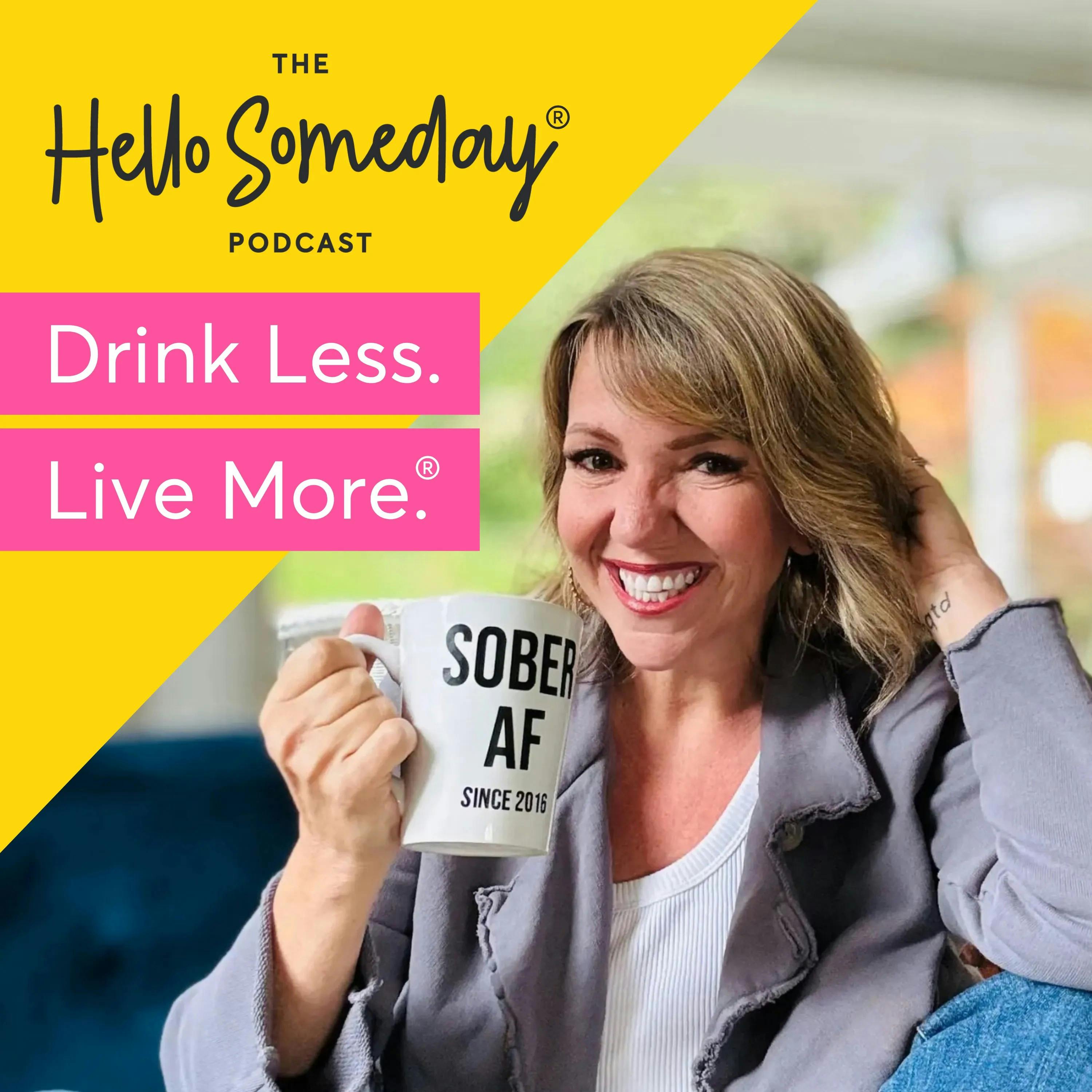
The Hello Someday Podcast For Sober Curious Women
Casey McGuire Davidson