Sober Friends
The Sober Friends Podcast: Two Guys Talking Recovery
Matt and Steve have been sober for over a decade each. They still don't have it all figured out.
This is a podcast about recovery - AA recovery specifically - but it's not your sponsor's recovery podcast. It's two friends talking through the stuff that actually matters:
What do you DO when you're not drinking? How do you handle control issues 15 years in? Why does calling someone in recovery feel so goddamn hard? What happens when you remove alcohol but don't replace it with anything? And seriously, do you miss drinking or do you just miss the relief?
Every week Matt and Steve work through these questions together - sometimes they have answers, sometimes they're figuring it out in real time, and sometimes they just need to talk it out like you do with a friend who gets it.
If you're in recovery, thinking about recovery, or just trying to figure out how to live without alcohol as your coping mechanism - welcome. Grab some coffee. Let's talk.
Topics: Alcoholics Anonymous, 12-step recovery, sobriety, addiction, relapse, service work, early recovery, staying sober, and everything in between.
Matt and Steve work AA programs but speak only for themselves. This show isn't affiliated with Alcoholics Anonymous.
New episodes weekly at soberfriendspod.com
Sober Friends
E274: Sober Twelve Years. Still Avoiding the Phone
Use Left/Right to seek, Home/End to jump to start or end. Hold shift to jump forward or backward.
Matt and Steve talk about what happens when old alcoholic thinking shows up without the alcohol. Matt shares what it has been like tapering off medication, including the dark, isolating feeling that reaching out would not help — even when he knows connection usually does.
They also get into emotional overreactions, escape fantasies, family stress, broken phones, sponsor avoidance, and the uncomfortable truth that recovery still asks for action long after the drinking stops. This episode is about those moments when you know what the program suggests, but doing it feels like the hardest possible thing.
📫 Get more honest conversations about sobriety delivered to your inbox! Subscribe to The Sober Friends Dispatch, our weekly newsletter where we go beyond the podcast to share real strategies for alcohol-free living. Join our community by clicking here.
I'm going to blow up. I'm going to lose my shit. And I'm going to all of a sudden, and then again, one of my new favorite phrases, because if it's me to a tee, I start running my escape fantasy, right? How do I escape from life, right? And I mean, I still have an escape fantasy. Mine doesn't include alcohol anymore or drugs, but it includes just getting away with like, you know, the way I put it into words, when I talk about it is packing up my car, going up to New Hampshire, getting a cab in somewhere, and just live in the woods where I can do some hiking with my dog. Just get away from the world.
Matt:Welcome to The Silver Friends podcast. My name is Matt J and Steve is over there. What do we do? We talk about supply. We talk about things that not as sober, sometimes we talk about the things that kept us out there for too long. So if you have a burning desire to the way out of the bottle, I think that you are in the right place, Steve, what is going on with you?
Steve:fine. Good Sunday morning, Matt. It's a beautiful day up here in Connecticut. You won't hear this on Sunday because that's not when Matt drops it, but yeah, it's a beautiful morning and I can't wait to get outside. And it's going to look a little cool, but nice for this
Matt:That's
Steve:area. It's beautiful.
Matt:Sunny and dry is fine.
Steve:Yep, so that's all good for me too. So all good here, Matt.
Matt:Great. Well, I think I'm okay now. We've had some things going on. You didn't see the break, but my daughters had some health issues. They both popped their knees in and out, doing the same thing, playing soccer. And I've been tapering off a medicine. So I've been taping, tapering off a vendla vaccine, which is known as a fixer, the highest that I was at was 300 milligrams, which is sort of a max dose. And I was on this thing for probably over 10 years. And the reason I didn't get rid of the medication earlier was because of the withdrawal symptoms. So I've been tapering a little bit at a time. And I think I'm at like six months of a taper. Sort of at the last place. And even though I'm dropping 37 and a half milligrams every single time, that becomes a bigger. Or it becomes a bigger percentage of the medication drop. So you feel it more. And this medicine also has a very short half life. So you feel those withdraw symptoms faster. And the first week or so of the taper each month has been puff on me. This last one where I've gone from 75 to 37 and a half has been the roughest, especially that first week, which I'm going to tell you all stuff that we talk about in recovery. When I was feeling the things that I was feeling, it felt like connection is futile. That nobody's able to help me, even though I was feeling some awful things. They felt real. And there are times that I wanted that it would dictate reach out to somebody and say hello, you're going through. And whatever it is with this taper, it feels like I don't want to talk to anybody because it just won't make a difference. I am past that point now. It's been two or three weeks, but it was a really crappy first week. And I think people can identify with that. I'm feeling something in my recovery. And yet I'm not calling anybody because I just don't think it feels futile.
Steve:Yeah. But a couple of things there that just jump out at me. The first thing is that one of the things that I struggle with, I think a lot of us in recovery struggle with is how we deal with our feelings and how we recognize them and what we do with them, right, and I still struggle with this, right. I haven't mastered the art of understanding that my feelings are just that, right. Their feelings, their something that I really can't control, right. I mean, I can't control how I feel. I can control how I react to my feelings. And that takes a lot. I mean, for this alcoholic. Now, some people do this naturally very well. I struggle with it a lot. I struggle with a lot. And I too have some of these. I don't know if I would call it doomsday feeling, but like when I get some of these certain feelings, the things that bother me most, I don't typically share about them. I go, I don't want to be a winer, you know, I mean, I go through the whole, I go through the whole litany of stuff of why I don't want to talk about it. And that does, is one of those things that we are told every single time we go into a meeting, if you go to enough meetings, if you listen to enough people, of people sharing about their stuff, what we are doing is we are isolating ourselves
Matt:Mm-hmm.
Steve:from something that will help us. Right? And again, it's a natural thing, I think, for a lot of us who drink, uhm, to isolate ourselves. So, it's this, this whole snowball effect of, I don't want to share about it, and you're right, nobody's gonna help me. And again, here's what I have learned, and I do a pretty good job with it. I understand that nobody's gonna have a solution for me. But I feel better talking about it, right? I mean, that's just the truth. I feel better talking about it. And I've learned that, which is why when I go to a meeting, I tell people, like, I put my stuff out in the meeting, I'm very open, um, I mean, I don't, you know, they're, obviously, the stuff I don't share about in the meetings. But I put a lot of stuff out there, so that the people in my regular groups know where I'm at, and they know how I'm feeling. And, uh, and, you know, I do that, and I did it Friday night, you know, I had my Friday night meeting just a couple of nights ago, and I had some stuff on my mind, and I talked about it, and I put it out there. And, and I even put, I put off some stuff, I, in fact, I shared Friday night that I started a GLP 1 e medicine, right? And this is a men's meeting, and, and I had a bunch of guys look at me, right? Like,
Matt:say,
Steve:you could just well, first of all, like, look and probably like, oh, you don't need that, you know, all that same stuff. And again, that was just me, just That doesn't mean that that's what they were thinking. That's what I was feeling, right? But I also put it out there for a reason, right?'Cause I know some other guys, there's some guys at that meeting we talk about, how our weight we struggle with that kind of stuff. I put it out there so that guys who maybe thought about it, know that I'm doing it, and they can talk to me about it, right? That's one of the reasons why I finally did it. Right? After about two and a half months on this stuff. So, um, now they know, if somebody wants to come up, hey, you know, can I ask you about that? They know. They can ask me, I don't need to talk about it.
Matt:mm-hmm.
Steve:Um, but, you know, I put it out I put it out. And there was a reason why I put it out there because it does help me with some of my other cravings, right? I mean, there's the whole talk about
Matt:Yes.
Steve:that whole, that whole thing of alcohol cravings and stuff like that. Um, and it's not just that other, like that whole, it's that whole reward center that it sort of draws it back some. Anyway, well, um, so, but when I get those feelings, and I don't want to talk about it, um, you know, it's one of those things where I think I have to talk about this stuff, right? The other thing that I hear about day in and day out, mostly at my mens meeting, but also at my other meetings, is that, um, for me, this really stays sober and have a really my best life possible. I have to do things that I don't want to do, which is also talk about stuff, right? Um, so I really have to work on some of that stuff. So that's what jumped out at me is like, yeah, I get it. We don't want to talk about it. Um, but the truth is, our program demands that we talk about it. It really does. It demands that we talk about it. And I, I think, and when you and I have talked about this, we've talked about this on. We were sort of in the same boat with sort of, we have a sponsor. If somebody asked me, yeah, there's a name we could out there, but we don't use it. We don't use our sponsor as much as we should. Not that we don't use other people. Um, and that's been and waiting on my mind. And I think that's one of the things. And I think that's one of the different things about people who really are working a good program. Like they have a sponsor, they talk to a sponsor, they do all that kind of work. And I, and I look at those people and I go, yeah, I need, I need to be better in that part of my program, right? Because the truth is that's going to help me. And I've really thought about this over the last few days because I've had some, some of my own shit going on is that like I need to reach out to my, my, my so called sponsor. And, and just, you know, and he's a nice guy and I'll just say, hey, let's get together for coffee for lunch for breakfast and just to touch base with that a little bit. Because he's just retired in the past year. I'm flexible enough that we can meet anytime during the day. It's sometimes probably, and I thought about it yesterday I meant to call him yesterday and I just didn't. And I think I'm going to call him after I get done here and just don't know if he'll pick up or just put a message in there and say, hey, let's get together for some coffee and stuff. Because that will help me start sharing stuff that I don't know where to share it. Right? Just share it to another alcoholic. So that's what jumped out at me when you shared your stuff. And, and how, again, I think as alcoholics, we a lot of times we, we, we head down to isolation path, which is a little bit scary for us because that's, you know, that's, I know for me it is. That's, that's when I start thinking, oh, I could do this and nobody'll know. I can do this and nobody will. Or worst case, I can do this and nobody will care. Right? Nobody will care.
Matt:Yeah. Yeah, I'm hearing Mitzi, our friend who supports our show, monetarily, every single month, screaming with your earphones and saying, "Where in the program is this? Why are you complaining as opposed to tying in the program?" And I don't like thinking that way because I know Mitzi's right. And I think, well, let me ask this, where do you think stepwise this falls? Is
Steve:this--
Matt:step nine repeated or is there somewhere else that this type of stuff would fall?
Steve:I actually think it's probably more of a step four or five, right? I mean--
Matt:We're
Steve:doing some avoiding stuff going on there. I don't want to talk about it. You know, nobody's going to be able to help me with it. Yeah, that's where I think you've got to start thinking, well, you know, when you start taking it into your life, why do we feel that way? Why do I feel that way? Why do I tell this? This is it. Why do I tell every other alcoholic who ever says I don't want to call people because I feel like I'm whining? Don't worry about it because when you call somebody, it gives them-- you're helping them too. Why do I tell every other alcoholic that? Yet I fall into that same trap myself, right? That's just human nature. And again, some people do it better than others and all that kind of stuff, but you know, that's the nature. For me, that's the nature of this disease. And I guess it's all not disease. Some is just my personality, but my personality-- led me to a place where I thought alcohol was my solution. So
Matt:yes--
Steve:it's all tied into me-- for me personally. For me personally, it's all tied in. Like, I born this way, whatever the deal on how I got there. I have these characteristics and they're not all defects. They're just, you know, just who I am. Where I feel some of these things. And I'm able to out to other people and tell them, call me any time. And I truly mean it. Call
Matt:reach
Steve:me any time you want. And I'll help you as much as I can. Yep, I'm still reluctant to apply those same principles to myself. I don't know why, right? And maybe, yeah, maybe I do know why. Maybe because I don't have-- I'm not using my sponsor the way I should. Maybe that's the answer. I don't know. I guess I'd have to do some work on that myself. But you know, it's easy when we're going like you and I. We live the same. We talk about it. Like, we're not-- we're not thinking about picking up a drink. We're not thinking about going out there. So it's easy to brush some of these things off. But the truth is if we want the best quality life for ourselves and for the people we love, then there's work to be done. There's work to be done. And I'm very much aware of that. Like, I'm very much aware of that, like, when I'm doing work on myself, it's not only benefiting me, but it's benefiting the people around me, mostly my wife, right? Because she spends the most time with me. But it's benefiting the people I care most about because it's putting me in a better situation where I'm not as reactive. I'm not-- I'm not as touchy. I'm not all those things. So if I'm ignoring my feelings, if I'm not talking about it, eventually, I'm going to-- I'll just tell you again, this is me. I'm going to blow up. I'm
Matt:Yep.
Steve:going to lose my-- I'm going to lose my shit. And I'm going to all of a sudden. And then, Again, one of my new favorite phrases, because if it's me to a tee, I start running my escape fantasy. How do I escape from life, right? And I mean it. I still have an escape fantasy. Mine doesn't include alcohol anymore or drugs. But it includes just getting away with like, I'm, you know, the way I put it into words when I talk about it is pack it up my car, going up to New Hampshire, getting a cab in somewhere, and just live in the woods where I can do some hiking with my dog, like, just get away from the world, right?
Matt:yeah.
Steve:And that's a real fantasy that I run through every time my life starts feeling stressed. Like, I want to get the fuck out of here and I just want to go, and I want any of the response about it. Now, the truth is, I don't want any of that stuff, right? I want to be by my family. I want to be by my grandchildren. I want to be by all these things. That's, that's the truth. But that fantasy runs often in my head that I just want to, I just want to get up and walk away from everything.
Matt:Yeah, the escape of reality type.
Steve:Yeah.
Matt:Yeah, I had, what prompted this is I think it was not two weeks ago. It might have been a little bit longer that we were coming back from soccer and there were some things going on with the kids that they were driving me nuts, and I was using as much emotional intelligence as possible not to snap. And I was getting snappy at night because my daughter who has ADHD and struggles with putting things away, put her cell phone on the van. I didn't know the cell phone was on the van so I took off to go somewhere and it went flying and they found a way at the end of the street and the display was smashed and I was not happy and it led to a discussion with my wife where she was saying something along the lines of we understand that you've been tapering off this medication for six months it has been difficult for everyone. I heard it as we have been dealing with you for six months in this state and it was such a it was a gut punch
Steve:yeah
Matt:and I couldn't get past it it hurt as much in that moment it hurt as much like six hours later as it did in the moment and that was that's the medication taper that's not me the chemical thing but it was it's hard to decipher that when you're feeling that
Steve:the emotion
Matt:the emotions are not real it's that the chemicals in the brain are not balanced the right way and that they will write size but they won't in the moment so you have to feel this pain that is not reality and that's that's very hard and in the end I went I did what I do well as I got to work and I grabbed her phone she's crying and stuff I grabbed her phone it took me forever to figure out how she was logged into Duolingo because she had a 450 day this is 12 year old girl 450 day streak of learning German. She didn't want to lose her streak and it took me forever to figure out where was the login and it was one of these things where you log in with your Apple ID on the app but that option is not available on the web
Steve:right
Matt:so it took me forever and I figured that out and then I figured out the insurance we have through our carrier but I had to go through like a bot and then chat with somebody because in the end I just wanted to go to the Apple store and get it fixed
Steve:yeah
Matt:and I had to go through a path to get there and then I finally got there and then we went to the Apple store and they were great and they were able to fix everything with no cost so this smashed up iPhone is fine so in the end it was fine it usually always is fine in the end if you can just be patient and play it out but to me in that moment it was a catastrophe and it is a it's so I think it's so hard for a lot of us that we don't have patience I don't have patience in the moment and this is one of the reasons there's a lot of people ADHD who have a propensity towards alcoholism that lack of patience being stuck in the moment and that pain in the moment that even though if I zoom out this will come to its logical conclusion everything is fine nobody has any reason to be upset but it doesn't change how I feel in the moment so
Steve:listen it's hard life is hard we talk about it all the time like again these feelings are you I haven't mastered it yeah I'll be 68 years old and I've got you know I've got the decade and a half of a pretty decent sobriety and I still haven't mastered it I still have not mastered
Matt:know
Steve:that I
Matt:mm-hmm
Steve:call it the roller coaster of emotions I do like you know and again one of the things that happens to me and it just happened this week is expectations over what really happens like you have an expectation of
Matt:yeah
Steve:of something coming on and then the reality or whatever it is that doesn't meet the expectations and that emotional drop still gets me still gets me I mean it still just really just devastates me at time and it's hard and and and and here's the thing I give myself some credit for like I don't over react like that I used to lose my shit and over react that I don't do that anymore but I still struggle with it big time big time
Matt:mm-hmm
Steve:uh but I'm able to get through it and then I'm able to have conversations about it much more quickly and so there's a lot of really good stuff I don't want anybody out there thinking that oh my god what are you doing which like there's a lot of good stuff happening in my program my life because of my program
Matt:mm-hmm
Steve:but it's it's still hard like I said and in like that gut punch you talked about what somebody says something and even if it's not meant that way that you perceive it that way oh man it's really really tough I just want to tell a very short story there's a guy at Friday night meeting who young guy when I say young is in his 40s who shared that he had a he had a a blockage in his his sewage pipe right and if you know what that means that means stuff is
Matt:oh
Steve:backing
Matt:yeah yeah yeah yeah
Steve:all right so he came in he was really stressed out and he called and he had called up a company that everybody knows it's a company in Connecticut um and they just they're just they just overcharged everybody and that we so we were to all the guys they were teasing them like oh you can't be so anyway I've had this problem like I've had this problem.
Matt:I remember.
Steve:god. Yeah, and and several times and I so I have all the people that he needed. So I told him like here's who you want to call Bobo and then he's like and so it's he gets a quote that's going to cost him 30 30 grand to fix this problem
Matt:Oh my
Steve:and I'm like first of all I'm like this first of all is not going to cost you 30 grand right that company. So finally I said to him. I'm like listen here's who you got a call. There's a guy out there who does my drink who did my drain before I had a thick I finally bit the bullet and had it all fixed and he's good. Like here's who you got a call you got to call this guy up you're going to spend a few hundred dollars and he's going to tell you what the problem is he's going to tell you if your sewer is collapsed and you need a whole new connection or whatever. Long story short and then he had some money problems. I'm like I'm going to tell you call up this guy and this is not about me. I mean this. I don't want I said call up this guy and you tell him to come over there and I'll take it and then we'll work out the payment right. So yesterday I'm out hiking. He calls me and I tell him this like call up this guy and he calls up the guy and the guy's coming over the last night and he calls me up. Finally he calls me about seven o'clock and he goes I can't believe it right. This guy fixed the problem. The point is this guy fixed the problem for a few hundred dollars versus what does other company called what's telling him 30 grand to fix it and it was that stress right whole stroke this guy with this kid was supposed to he didn't have 30 grand to fix it. Was this whole stress but the point is he talked about and I told him after he called that's like listen you shared it. You found someone within me who had the same experience and was able to help you right. And I said if you don't share that stuff. How do I know that you need help right. And this is a little bit what we're talking about if we don't talk about this stuff. If we don't share it with somebody then how do we know that there's not a person out there who can help us with it. So that's the thing. And again, I still at this point. I just like you like, oh no, I won't talk about it. I won't call anybody. I won't you know, I won't call my buddy Edson again and tell you that this is the same story, right. And plus I don't make my may not want to hear what Edson's going to tell me
Matt:because yeah, that's what I'm thinking. I don't want to talk
Steve:right
Matt:because I don't want to hear what Edson's going to say.
Steve:Right, right because I know he's going to tell me the truth and he's probably going to tell me some stuff that I need to do. But I'm not going to want to do it, right. So so why would I want to call Edson when even though that would help me out.
Matt:Yeah, I really think that that's. that's that was not exactly how I was feeling in the moment when I didn't want to talk to people. It was
Steve:Yeah,
Matt:regardless of what they say.
Steve:Yeah,
Matt:what they say is not going to help me in any way. It's going to be a nerd. It's the best way to describe it. And that's how I know in that moment that this is a chemical thing because that's not how my normal thought processes talking to somebody usually is helpful, at least to get it off of my chest. But in these cases, it is. I don't want to talk to people because it's not that I'm going to hurt their feelings or bother them. It's just it will make no difference one way or the other. So why expend the energy. And that's a very dark place for me to be
Steve:Mm
Matt:I was there
Steve:hmm.
Matt:a couple months ago, something happened, and I realized this is the taper. Don't I mean like this is the taper that's talking. This is not because it's it's a thought process I usually don't have. So what's different. I still felt the way I felt, but it still was the feeling that I was feeling. I was at Monday night feeling this way and I didn't share about it because it was just like I'm going to go to this meeting and I'm going to gut it through. Because I just I don't want to talk to anybody about this. It's not that I don't want their help, I just I don't want to talk about this. It will make no difference. So I'll focus elsewhere. And at least I got it out going. But it's still sucked.
Steve:Yeah, I mean. Again, I again, if when you're talking about something that's medication driven stuff like that it is different. There's no question about it is different because there is a chemical change, but there's also a chemical change and the questions and all that kind of stuff, right.
Matt:it. Yeah,
Steve:I mean, we have right, you know, regardless of your on meds, like sometimes those those chemical imbalances that that's what it is, right, when you when you're your your face with all this stuff, but stuff. My point is is, those are still to me, at least from my point of view, and I don't suffer from anything like clinical depression. So I don't want to be talking. I don't want to be suggesting that somehow this applies to people with clinical depression and have some really issues, but I still believe those are lies that we tell ourselves, even if even if they're chemical, those are lies, like we're telling ourselves that not talking about is not going to help that nobody is going to be in there, right. That's what you said. But this is my whole point. I find that and I have those thoughts too, but it's not in there. It's it when when I talk about it, I feel better. Right? Same thing when I go to a meeting and I talk about my stuff, I feel better. Whether I think it's going to make me feel better or not so that I know the action of talking about that. Nobody's going to fix it. I know that for for the most part like I don't when I share my stuff is not looking for somebody to fix me or give me answers. If I am I asked for that that help. If anybody knows how to fix this problem please let me know. But most of the time I just I just need to talk about it. Right? And I don't do therapy. I don't do private therapy. I don't have a therapist. Some of this stuff if I did, would I be sharing with the therapist? I choose to share my most of my stuff at my meetings, my regular meetings and and that's that's how I do it. Right? I mean I share and when typically I'm like, all right, I feel better. I just dump the bunch of shit. I feel better about it. So sometimes that's all I need. Sometimes that's all I need. And other times I need some action. And then it becomes am I willing to take the action needed? That's part of our program. Am I am I willing to take the action I need to take or am I not? And I get to make that choice as a 68 year old almost 68 year old human
Matt:being. Well, that's the hardest part is taking the action that I know I need to take.
Steve:Yeah, absolutely.
Matt:That's a tough one. I mentioned this and I share these stories. I hope you can thread the needle, not because I want a bitch in moan and show that this stuff is hopeless of use my example, giving you a real life example of in sober 12 years. And I have these issues and I haven't had it figured out yet. Haven't I figured out perfectly. So don't do these things. I want you to identify with these feelings so that you can avoid a path I took and do it a little bit better. And also by me saying it out loud, that's going to help me going forward, because I have I got one last step. The one last step on this taper is 30 37 and a half to zero. And so that's not a 50% reduction that says 100% reduction.
Steve:Right. Yeah,
Matt:that that may be very challenging. So maybe what do I need to do to prepare for that? What's going to be my plan there? Do I need to have a check-in plan with people, even if I feel nothing's going wrong?
Steve:Yeah. Right. Do you need to have a plan? Hey, I'm going to be reaching out right, letting people know I'm going to be reaching out during the day because I got this going on. And again, that's what we talk about. Let people know that when, so if you called, they're going to pick up not that most people wouldn't. But if you tell people, I got something going on, and I'm going to reach out. Then they're more apt to pick up even if it's an inconvenient time, right?
Matt:right.
Steve:Because hard big. Yeah, just it's just the way it all works. And again, but it's it's hard. It's hard for
Matt:Very
Steve:some of us. It's hard to do all this off. It's hard not to think that we're not burdens. All the things we've talked about today. And like I said, taking the action that we need is sometimes really, really hard. So that's why we keep working the program. I mean, that's why we do this. I mean it. That's why we show up and we do this podcast. So we can work through the stuff. That's why we go to meetings. So we can do this stuff. I said all the time. See, only way it's the only way I know. Me personally, how to keep myself going in the right direction. If I stop doing this, in the, you know, this podcast is part of it. I mean, if I stop doing this, if I start saying, uh, I don't need to do the podcast anymore. I've done it for a couple of years now, it's time for you know, um, then, you know, I don't need to do a meeting. If I start going down that road, my life becomes unmanageable.
Matt:Yep,
Steve:and when my life becomes unmanageable, I need a solution to dull that pain and, um, yeah, and that for so long of my life, for a good portion of my life, that solution was alcohol. And, uh, and now today, I don't, I know I can't do that. So I need to have other solutions. And so it works. So why change it, right? That's what I always say. It works. Why change it? I, I, last thing I'll say about this subject is I follow this guy who's really an NA guy on social media and I love them. Just where he talks. And he talks about how he spent so much time in his life. chasing his high, his drug, you know, his alcohol and, and, and, and he goes, and when I came to, when I came to the rooms, he goes, somebody told me that I had to spend an hour a day, he was talking about like going to a meeting every day. And I was like, oh, no, that's too much. I'm not going to do that, right? And he goes, I spent 24/7, you know, trying to stay drunk or high or whatever. And then I get to the rooms and people tell me that I have to spend an hour a week or that I have to talk to somebody, right?
Matt:Yup.
Steve:And he goes through this whole thing, right? He talks this whole thing, how people taught him how to pop the security tax and how to steal clothing and, and how to steal food. Like they, I had all these people taught me how to do that. I was okay with that. But now you're telling me, I, I have to ask somebody to teach me how to live properly. And I'm saying, no, that's too much. I won't do that. When I see that, I'm like, ooh, I have to remember that, right, that I have to be teachable. I have to allow people to help me. I have to remember that this is this, this is the kind of medicine that I need on a regular basis in order for me for me to stay healthy. And, and, and I'm grateful for that. I do. I wake up grateful all the time because I have that, until something changes, nothing will change. So I want to keep doing this because, like I said, I love my life. And even though I still have escaped fantasies, I know deep down in my heart. It's not what I want out of my life.
Matt:I hope this lands for you. And if it does, we would love to hear from you, mad at soberfriendspod.com. And, soberfriendspod.com. Thanks, Steve, for letting me get a little of this stuff that I felt inert off my chest. It was helpful.
Steve:You're welcome, Matt.
Matt:We'll see everybody next week. Bye everybody.
.png)

Podcasts we love
Check out these other fine podcasts recommended by us, not an algorithm.

Sober Powered: The Neuroscience of Being Sober
Gillian Tietz, MS, CPRC
Recovered Podcast
Mark S.
Sun & Moon Sober Living Podcast
Mary Tilson
Behind The Smile with Ash Butterss
Ashleigh Butterss
The Sober and Happy Podcast
Tim Phillips
Adult Child
Andrea Ashley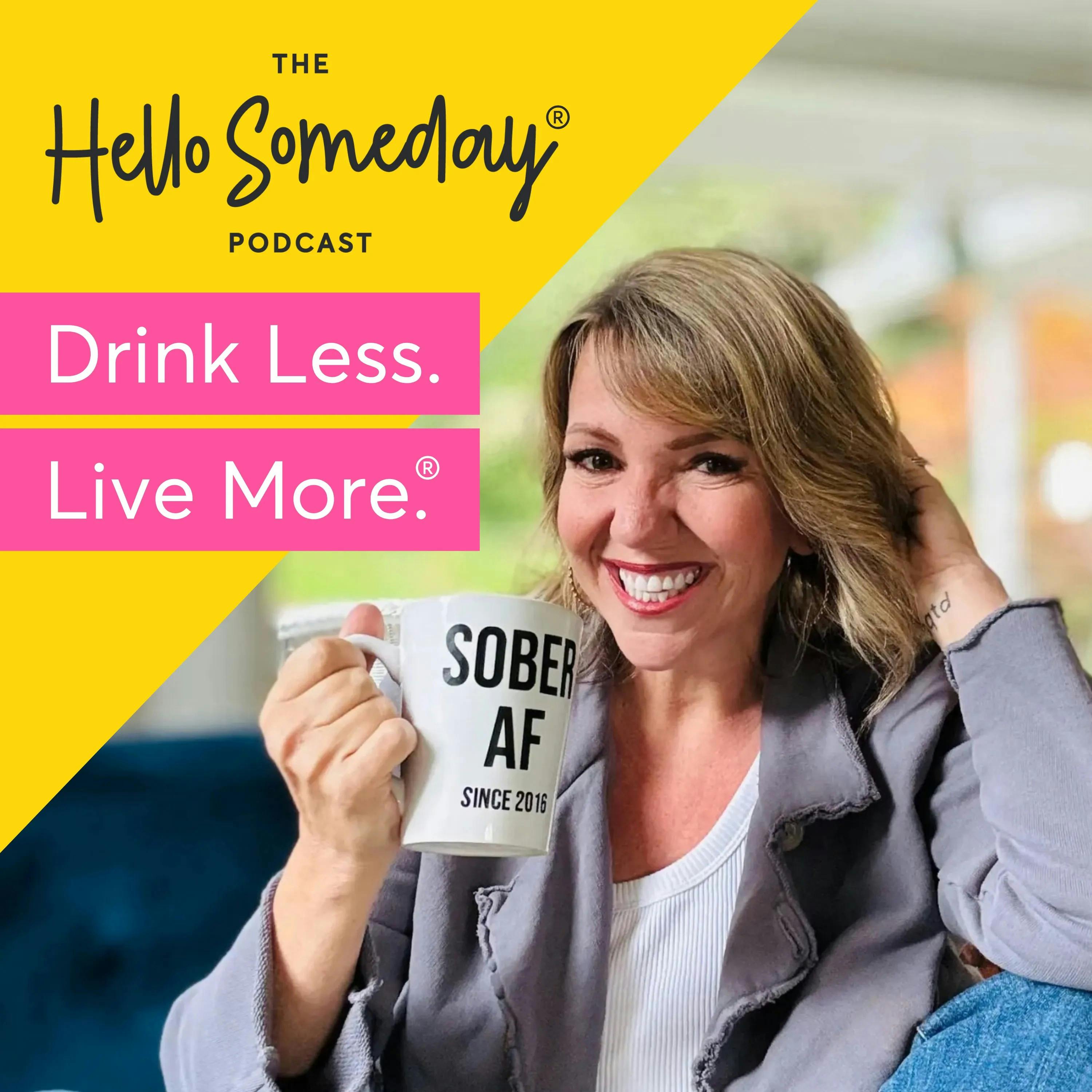
The Hello Someday Podcast For Sober Curious Women
Casey McGuire Davidson