Sober Friends
The Sober Friends Podcast: Two Guys Talking Recovery
Matt and Steve have been sober for over a decade each. They still don't have it all figured out.
This is a podcast about recovery - AA recovery specifically - but it's not your sponsor's recovery podcast. It's two friends talking through the stuff that actually matters:
What do you DO when you're not drinking? How do you handle control issues 15 years in? Why does calling someone in recovery feel so goddamn hard? What happens when you remove alcohol but don't replace it with anything? And seriously, do you miss drinking or do you just miss the relief?
Every week Matt and Steve work through these questions together - sometimes they have answers, sometimes they're figuring it out in real time, and sometimes they just need to talk it out like you do with a friend who gets it.
If you're in recovery, thinking about recovery, or just trying to figure out how to live without alcohol as your coping mechanism - welcome. Grab some coffee. Let's talk.
Topics: Alcoholics Anonymous, 12-step recovery, sobriety, addiction, relapse, service work, early recovery, staying sober, and everything in between.
Matt and Steve work AA programs but speak only for themselves. This show isn't affiliated with Alcoholics Anonymous.
New episodes weekly at soberfriendspod.com
Sober Friends
E275: Stop Arguing With Reality for One Day
Use Left/Right to seek, Home/End to jump to start or end. Hold shift to jump forward or backward.
In this episode, Matt and Steve talk about acceptance in sobriety — not as approval, not as giving up, and not as pretending everything is fine. It is about getting honest with reality instead of wasting energy trying to control people, outcomes, feelings, or the past.
They dig into why acceptance can feel so uncomfortable for newcomers, especially when it sounds passive or weak. The conversation gets into control, resentment, asking for help, and the simple but difficult practice of seeing what is actually in front of you before deciding what to do next.
📫 Get more honest conversations about sobriety delivered to your inbox! Subscribe to The Sober Friends Dispatch, our weekly newsletter where we go beyond the podcast to share real strategies for alcohol-free living. Join our community by clicking here.
Today we're talking about acceptance, which is one of those recovery words that sound simple
Steve:Ha ha.
Matt:unless you absolutely have to practice it. Welcome to the Silver Friends podcast. You talk about the things that Silver people talked about, drunk people, I guess, talk about it. They want to get sober if you have a desire to quit drinking or already have, you're in the right place. My name is Matt. Steve is over there and Steve, and you first heard the words.
Steve:"It
Matt:sound helpful to you?" Or did it sound like someone telling you, "Hey just deal with it."
Steve:Good morning, Matt. I don't know when I first really heard it. I mean, obviously I heard it before A-A, but it became very prominent in my life. Not when I got to A, but when I started working with this program of A-A, right, 'cause you go into meetings and you hear it, and what I like to do when I hear something like that, even today, is I like to look the word up 'cause,
Matt:sometimes
Steve:I think I know what it means, or I have this in my head of what it means, and then I look up a word and I find there's more to it, right, like there's more meaning, so there's more depth to the meaning, and so it took me a while to figure it out and I definitely was something, I did not want to accept the world as it was presented to me, right? I did not. I was in control, because I grew up in an alcoholic family, I was self-sufficient from a very young A right through high school, early on high school, even maybe late grammar school, like middle school, I would get myself up, get myself ready for school, excuse me, and so I thought, I moved out of my house when I was 19, I felt that I didn't need, like I was in control of my life, so for somebody to tell me that I needed to accept things the way they were, it took me a while to figure that out, and even when I figured it out, it took me a while to embrace it, and then even today it's something that I need to work on on a fairly regular basis, right? There's still things that I just want them to be different, and I do find today the harder I try to control some of those things, the tougher it is for myself, for my life.
Matt:I hear acceptance, especially early on, and it has such a negative connotation for me, and it can be misunderstood, it doesn't mean all situations not okay, so I just have to accept the way things are, and they're bad. Now, it's not about giving up, it's about really telling the truth so you can make the right move. This might be a good time to talk about what acceptance isn't, because I think for somebody brand new there can be misconceptions. What did you think acceptance met when you first got sober or first heard that word in a 12-step group?
Steve:Well, I think a lot is what you just said, right, that I had to just suck it up. I had to suck it up. Accept it. Hey, accept it. You know, your wife is, you know, people would tell me one of the biggest things that lots of alcoholic struggle with, and I'm no different, is that personal relationship and for me it was with my wife, both my wives, so it would be like, I'd walk in it up, people say, yeah, just accept it. She is who she is, and it's like, dammit, no, no. So, yeah, it was just like, I just had to grip my teeth, and that's not what acceptance is today.
Matt:Nope.
Steve:It's it's it's it's understanding, like I said, it's way more nuanced than that. It's understanding. Basically, again, we talk about it a lot. A A's talk about a lot. It always comes back to that serenity prayer, and if you want to know what acceptance is, just recite the serenity prayer, and it helps you for sure to figure it out. And it's about trying to figure out, what do I really control in my life, right? Like what's the true control that I have in my life? And when you really dig into that, and again, this is why I think people struggle with it sometimes, and why I certainly struggled with it, is we have a lot less control over what happens in our life than we then we want to admit, and that we
Matt:absolutely
Steve:think, right? So we're so much dependent upon so many things that we can't control. You know, we can't control. We are, this, we really can't control whether our company keeps us, or, or fires us, or lays us off. Like no matter what kind of work you're like, you can't control that. You can't control relationships, right? Diverse, divorce rate is 150% whatever it is. That's what it really comes down to for me, you know, is like, and again, that's why I didn't understand it and plus, I don't know, early on, depends on how early you want to talk about it, early on in my sobriety, it was just such a struggle not to drink. I mean, it was such a struggle not to drink. I just had to literally accept that I was an alcoholic, and that I could never drink again. Even that was difficult for me, right? I mean, because we talked about it, if you listen to the podcast, you know, that I went 14 years without drinking and then relapse, so even that was a difficult thing for me, even though I knew I was an alcoholic. So it's, it can be, it can be tough, you know, it can be tough when you get into this early program. But that's why we come in. That's why we have a support group. That's why we get a sponsor. Like those sort of type of things that help you understand that and then obviously if you're going to be in a 12 step program, doing the big, big book work is essential, right? I mean, there's other ways to find acceptance to therapy through whatever you might want to do. But for, for me, and for us, it's most of it came to our 12 step work.
Matt:I had something in my head here that you hit upon, and it is going right out of my head, and I accept that I can't hold on to working memory. I think a lot of acceptance early on, which is not is hearing acceptance as weakness, or just being passive. Passive, I think, is the thing that really hits me the worst way that if I accept things, I'm just going through life and I'm on a surfboard. And I constantly have a struggle between that of when am I being passive and when am I just trying to accept things? And maybe it's the case. I'm just really overthinking this. I think it's very easy to look at acceptance as weakness and it's not. It's easy to look at it and say, oh, this is terrible. Nothing can change. It's your, or it could be something different. It could be this, okay. This is what reality is. Now, what can I do? Reality acceptance is more about how do I accept what reality is today without emotion? This is just being pragmatic. And it doesn't mean that the problem's going to disappear. It means the problem is visible enough to deal with it in honesty. So let me ask this, what reality do you think is the fight that's hardest in early society?
Steve:What do I think is the fight that's the hardest? Yeah, well, I mean, obviously the hardest thing is getting your ass into the rooms And then, you know, talking about acceptance is doing that first step, right? I mean, that's acceptance. Right? Doing that first step. I was like, hey, I accept that my you know, that I'm alcoholic and my life is unmanageable. Those are two big, those are big bites to take
Matt:and
Steve:in
Matt:they
Steve:life.
Matt:are.
Steve:You know. And again, if you're really beat up, it's a little bit, it's actually easier if you really beat up to accept those things. Right? It's, it's a little tougher. And I was pretty beat up the first time I came in. It's a little tougher when you come in and you haven't, you know, you haven't lost a lot. It really is. And that's the first hardest thing. And then for me, it was, for me, accepting help was a big issue for me. You know, one of the things I just want to go back to something and I just wrote just jotted on a quick thing is like, you talk about weakness. And I think I think that was my biggest opposition to it. Right? And when you talked about it, it brings me back to something like again, I'll be 68 years old. Right? It brings me back to an instant when I was probably 13. So I'm assuming I was either in 7th or 8th grade, and it was a tough time, right? It was, it was 1971. There was lots of problems. I grew up in a big, a decent sized city, lots of problems, lots of race fights in my school, lots, lots of problems. And there was a bully. And this bully, I can remember being like an industrial arts class, right? And I was just a, you know, little pudgy kid, long, straggly hair, unkept. And this bully was going around picking out all these kids and industrial arts and I had this sort of long shaggy hair And he came over with a saw and he's like, I'm gonna cut your hair and I looked at this guy and like this guy could have pounded me right like pounded me if you wanted to and I just looked at him and said No, you're not like We I just wasn't gonna let him do I wasn't gonna be passive right just like you said weakness and passive and I didn't care at that point What happened you know, I mean if you punch me and you know knocked me down the ground and did it That's fine, but I wasn't gonna be passive and allow myself to happen and that's way I've that was in my point is That's the way I was brought up. That's the way I had to live when I was younger So I couldn't be passive I had to be I had to stand up for myself so again when you when you talk about things like weakness and passive I do think that was part of my reluctance to accept the word acceptance if you will is like no I don't want to do that. I don't want to accept it this way. I don't want to accept it my life is this way. I want to change my life. Right? so That was the that was a big thing right and that brings you to that other big word that change word, which is really really hard You know, wait I got a friend I got a friend who listens to us pretty pretty religious Jim K. I'll call him he uses his last name, but I won't use it on the podcast and
Matt:Thank you.
Steve:He always says that Man, just like you I lost a train of thought okay, it'll come back to me
Matt:my working memory sucks
Steve:Right
Matt:my working memory sucks
Steve:Anyway, I'll get back to it. It'll pop in my head what Jim always says I
Matt:struggle with a sense of justice I Have a strong sense of justice and if you touch upon that it can really upset me So I think a long acceptance of I can't stand up for myself and I think that's two different things of Standing up for yourself and accepting what reality is This does come into step one and as I was thinking through this topic step one was especially where I was at Because to me that's the acceptance step that my life has become unmanageable. I can't drink anymore Not that enough is enough to piss people off I Should be able to drink normally. This shouldn't be happening other people are different than me my life shouldn't look like this and if I accept that I have a problem with alcohol I Can't go back to I should be able to drink normally I should be able to figure this out myself because I want to take step over that then I know that those sheds are no longer applicable and I have to let them go that I can't I can't hold on to that romanticism of Drinking is something I could do if I could figure out how to do it the right way I have to accept that that reality no longer is on the table That's really hard and I think for me that was the thing that made step one really really difficult
Steve:Yeah, that's why they call it a 24-hour program because when you come in especially when you come in To sort of try to swallow that like I can never drink again I can never do this again ever ever ever and I don't care when you came in I mean first time I came in I was 30 You see I was 30 sub years old Still that's a long time to think you know, and at that point I had drink I had really been drinking regularly for for over 20 years Right over 20 years at that point So the thing that I could never drink again it was just it's too hard and that's why we talk about it Don't worry about that just don't drink today And I just want to go back to what my friend Jim Jim casus he says he was told early on that the other thing You have to do to stay sober is don't drink go to meetings and change everything in your life And that was the point like change everything and again, that's another one of those things like how do you do that kind of stuff, right? And it's a big big piece to swallow But it really is hard to sort of think and this and this is what happens it's For some of us it's that struggle still goes on today Like I like today. I accept I know like intellectually Intellectually I know all of this stuff, right? I know all the stuff I can never drink again. I can't drink safely. It causes me problem. That still does not stop me from Every once in a while romanticizing the fact that man a single demio was this past week
Matt:mm-hmm
Steve:Right I'm a tequila guy like that that's right in my that's right in my wheelhouse, you know, it doesn't stop me from every once in a while having those and those are fleeting thoughts. So I had a similar thought a couple weeks ago about something very similar and I and after I went through I just went through it past the womb and I thought to myself how long did that thought I mean I really did this how long did that thought stay in my head and I'd be willing to bet that that thought stayed in my head for less than three to five seconds. So I mean that and three to five seconds of the long time people don't think it is but it's a fairly long
Matt:time
Steve:time and I'm like but I remember that I remember what I was doing like it's a picture in my mind of that three to five seconds of me thinking huh I could do this. Nobody'll know probably won't even affect me whatever you know. Those those type of conversations I had boom it was there it was gone and I'm like yeah that's that's me still trying to say maybe maybe maybe if I try something other than alcohol it won't bother me right I mean I it's just and to me I get it like I don't want to do that I don't want to roll that that dies my life is too good right now. The other thing you talked about which was our three theme on Friday our Friday night meaning. Do you use the word normal right and one of the things I have to accept and this is we had a great meeting Friday night and the topic was how alcohol and even you know even marijuana and now cannabis is so normalized right.
Matt:Right
Steve:right it's it's just normalized right you smell you smell weed everywhere everywhere you go now everywhere you go you smell it. Alcohol is just everywhere right everything you know all the commercials like it's just so normalized and you know one of the things I shared then and Friday night I'll share again is that I have to accept that I am not normal when it comes to these substances right. I am not normal talk about it all the time I live with a normal human being who likes to have a glass of wine either before dinner or with dinner and and that's what she has right, one. That's foreign to me that's a foreign thing that to be able to do that and not have it light some type of fuse or fire in my brain and my belly and my body it's it's an unknown I I do not know how to do that anymore. So I have to accept that I'm not normal again one of those things that's really tough that I have to accept that I'm a flawed human being right and then you start realizing when you do enough work that all human beings are flawed just in different ways
Matt:yep
Steve:so but to accept those type of things they were they were tough on me they were tough. I had a pretty high image of myself I worked really hard in life I worked hard for everything I had. I was like I said I was self-sufficient all those things they were very important to me and you know when I started realizing that yeah maybe I had to let let some of that go and and try not try as hard you know which again comes back to the thing passive
Matt:mm-hmm
Steve:lazy week like all
Matt:more
Steve:the
Matt:effort I put in better the result.
Steve:Right and today I realized that it does work like that and I'm able to and I'm able to dial it back on a lot of stuff not everything not all the time but I'm able to dial it back on a lot of stuff so that my life is way more peaceful may way more serene most of the time again I always like to say that most of the time because I don't want anybody out there who may be new or maybe struggling to think that no no I got this all figured out I do have it figured out but that doesn't mean I work it all the time I mean that's what it is like I have it figured out I know what works and what doesn't work the question is am I willing to do that work at the time I need to do it and that's that's a daily by day hour by hour things sometimes that most of the time I am sometimes I struggle with
Matt:it nobody has it it figured out all of the time that's a bit of acceptance there don't think that that person that you see that you admire has it figured out I promise you that they don't this is especially a social media thing that you see the social media people and you're comparing their outside with your insides you have no idea there are people I know and then I see their social media posts and I'm like you're a fraud because I know what you're putting out there is so different than how you're feeling And it seems like a negative comparison, but that makes me feel better in the sense of, it does show the rule that don't compare your out there outside with your insides, because you don't know what they're actually feeling. I struggle at work with this normal aspect, because of ADHD. There are things that I struggle with a lot more than other people. And I start to think like, how can you just execute on that task where it takes me forever to get going and for me to have to create systems just to get movement. And you can just do it. It's very frustrating and it can make me really angry. Or I can accept that I have this issue, it is going to take me longer. It is going to be harder and I have to have a system for that. Thank god for chatbots. I use chatgpt every day and I have a repeatable prompt where I talk about my energy level, how I'm feeling, how much sleep I got, what I need to accomplish, what are the constraints? That can help me with prioritizing and getting the stuff done that I want to get done. And even when to put stuff off, there are times that I feel like, why do I have to do this? Or I can look and see be grateful for the fact that there are tools out there that didn't even exist maybe a year ago that make me a lot more effective and also being humble enough to ask for help. I think that's something to talk about a little bit too. How do you ask people for help this?
Steve:Well the first thing you need to do is when you get into these rooms, which I think, again, it's different for different people. We talk about it and I talk about it on here that you need to have some type of community. You need to have a group of people that you can work with, that you can trust, that you can lean on. That usually starts with one or two people. That's what it is. Like usually you go in there and you get to know one or two people, right? A sponsor or whatever. It doesn't always have to be a sponsor, but someone that you can trust and lean on early in the program, you have to, for most of us, again, I'll step back to the 12 step because that's what we talk about. That's what we know. And that's 12 step process. It's imperative. It's imperative that you become part of a group. It's imperative for you. If you're going to have good success, good sobriety, that you become part of a group. Again, that usually starts with one or two people and you become friends with them or whatever and you hang out with them and then you go to meetings with them and then you find out who their friends are and then some of those friends become your friends and all that kind of stuff. It's easier to ask for help at that point, right? It's easier to ask for help. Number one, you get to know these people. Number two, is you get to realize just like we're talking, like, oh, these people don't have all their shit together,
Matt:right?
Steve:This is the thing amazed me when I first came in and it's why I gravitated to the people that I hang out out with today. People who have 30 plus years I came in and I started when I really came in, this is after my relapse in 2010. And I started to work the program and I started to feel better and I started to get this feeling like, okay, here's what my future looks like, right? Like, I know what I need to do. I get it. I got it. I'm working the steps or I've have already worked the steps and I know that I need to keep working on this. I had a hard time figuring out that why I was still struggling with life. I mean it. Why is life still kicking my ass so often?
Matt:is really.
Steve:And then I started to listen and pay attention to some people who at that time had 15 or 20 years of, you know, sobriety who were still getting their ass kicked on occasion and I went,
Matt:When
Steve:oh, it's not me.
Matt:Nope.
Steve:It's not me. It's, you know, it is me that I'm like, again, I'm not normal. But they're like, oh, this is the way it might be for the rest of my life. And I talk about that all the time, my meetings. Like, far as I know, as of today, as of this recording, I will have to do this stuff for the rest of my life. Now, maybe one day I wake up and I don't feel that way anymore. But number one is I don't feel a need not to do it to rest my life. I don't feel like it's a burden that I need to do it. There's a huge part of it that's social for me these days that I like doing it. But I also realize, again, as at this point right now that when I get away from doing this stuff, I get a little wacky.
Matt:Yep.
Steve:I get a little wacky. And I don't like being that way. I don't like being tense. I don't like being irritable, discontented, ehm, So, I don't know. I just, I accept the fact that I'm gonna have to do two or three meetings a week. I'm gonna have to, you know, do this podcast, you know, this podcast. There was a time where I didn't love getting out on this podcast every more. I mean it. And now, it's just like, it's part of my life, this
Matt:yep.
Steve:podcast. I mean it. Like, I just gave my wife, I went in there, you know, my wife. I can see that she was awake, and I just went in the wisher happy Mother's Day before we came in. She's like, oh, you got a podcast? You got a podcast? She was asking. She knows like, it's what I do on a Sunday, you know, Sunday mornings. And so I'm okay with that today because it's given me an opportunity to do things that I, that I, I thought maybe I lost that chance. And so again, I learned this by watching other people. I learned this by hanging out with other people. I learned this by working with other people. I learned this for me. I've gone through the steps twice. And I did it the second time, which is a different person because I wanted to get a different feel for it. I think I'll probably about ready to do it again. I've been really kicking this around of like, if I want to do steps again and who do I want to do them with, I would probably pick a totally different person to go to steps with again. Maybe my sponsor could have been, you know, 15 years. One thing we talk about is our, our sponsor stuff. And after we hung after we quit our recording last week, I pick up the phone called my sponsor who was up in Maine. And we haven't gotten together a long time, years and years. And I said to him, well, when we get back from Maine, he was up there just vacationing. Like, let's, let's get together. Let's have some breakfast. There's lunch or whatever it is and just reconnect a little bit. So we'll see. You know, I do that, but, um, but you know, it's, for me, it's about just being understanding where I'm at. that's all understanding where I'm at and understanding what I need and accepting what I need. And then again, executing that just
Matt:Yep,
Steve:because I know it just because I understand what I need to do. Just like I know that exercise and all this other stuff will make me feel so much better. I need to do it, I need to execute on that stuff or else, I could know that. If I don't execute on it, then nothing's going to change, right? So, um, it's a, it's a challenge. But, uh, I don't know, the alternative is, I go to my basement and I drink and nobody wants to be around me. And then, uh, you know, eventually, you know, I died 10 years earlier, um, or I crashed my car or, or, you know, or I hurt somebody else because I'm driving drunk and I end up in prison. I mean, that's like those, that's it. That's, that's the real life. That's it for me. And, and I know, you know, I listen, I don't think my kids listen to this. I think, I think if they hear me talk like that, they'd be a little bit shocked, you know, but like that's it. That's the alternative for me. Like that's, that's why I do what I do. And, uh, so, I don't know, I'm grateful. You know, I, I don't think about waking up grateful and doing all this stuff, but I am. I'm very grateful for the fact that I found these rooms that I found the group that I found. Um, so that it, you know, I, I know, I know what my path forward looks like. And, uh, and again, bring this back to that thing, it's acceptance, accepting that's my path. Now, let me see if I can stay on that path for as long as possible.
Matt:Trinity prayer is the guidance here. What am I trying to control? I can't control what am I avoiding? It's actually mine to change. Where do I need wisdom instead of more willpower? If this feels hard, it is. Don't feel like you're failing. If this stuff feels hard because it is. It's hard for us. It's going to be hard for you. A lot of pain comes from trying to control things that you can't change. Well, avoiding things in the column of what you can. I'd love for you to jot down a couple things. What are you still fighting? What is that one thing that you're still fighting? What's the one thing you can't control? What's the next step you can take? And here's something to take away. What reality is still arguing with? And what would change if you stopped arguing with it for one day? I'd love to hear from you. Jot down an email. Matt@soberfriendspod.com. The website is Sober Friends Pod. Steve, thank you for helping me hash this one through today.
Steve:All right. To all the mothers out there, happy Mother's Day. We're recording this on a Sunday, which is Mother's Day. Hang in there. If you're struggling, it's worth it, and have a great day.
Matt:We'll see everybody next week. Bye everybody!
.png)

Podcasts we love
Check out these other fine podcasts recommended by us, not an algorithm.

Sober Powered: The Neuroscience of Being Sober
Gillian Tietz, MS, CPRC
Recovered Podcast
Mark S.
Sun & Moon Sober Living Podcast
Mary Tilson
Behind The Smile with Ash Butterss
Ashleigh Butterss
The Sober and Happy Podcast
Tim Phillips
Adult Child
Andrea Ashley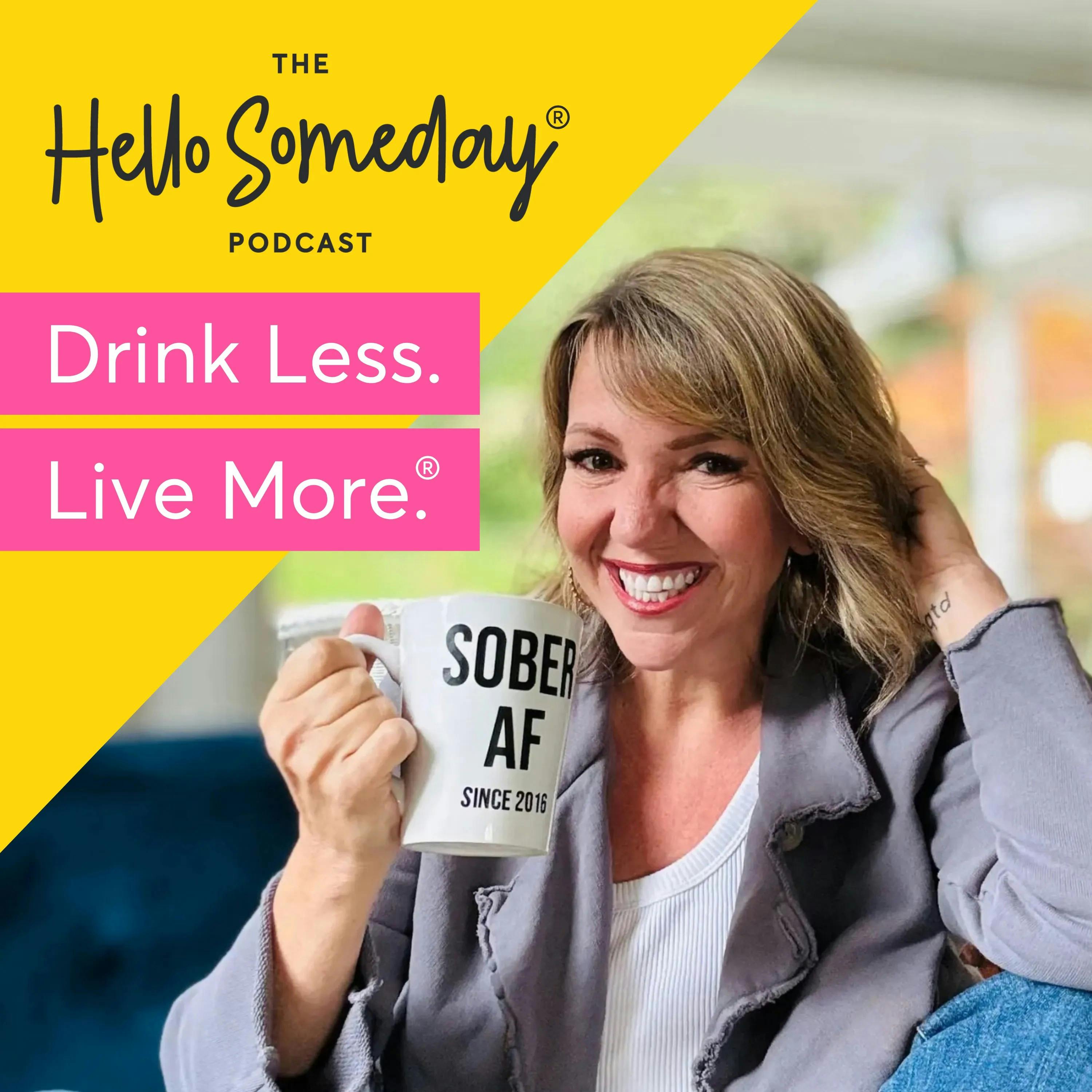
The Hello Someday Podcast For Sober Curious Women
Casey McGuire Davidson